

last updated on November 2, 2026
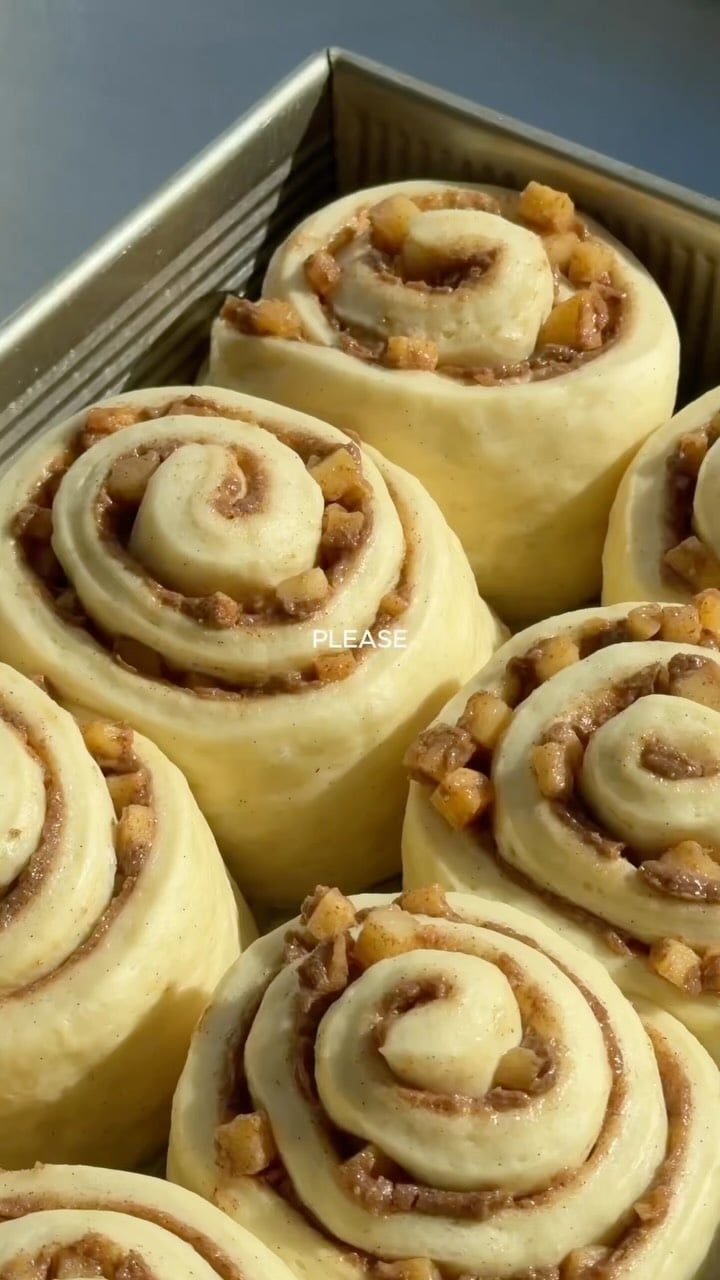
I have an obsession with all things cinnamon roll flavored, and these apple cinnamon rolls with cream cheese frosting are my favorite version yet. The rolls themselves are pillowy soft, and cinnamon apples are rolled throughout the dough and layered on top. The whole combination is perfect and is the ideal fall bite.
ingredients for apple cinnamon rolls with cream cheese frosting
for the cinnamon apples
- apples: Use your favorite baking apples. Envy, Honeycrisp, Granny Smith, Pink Lady, and Braeburn are all great options.
- butter: Butter helps the apples soften and adds a rich, buttery flavor.
- cinnamon: Cinnamon brings warmth and that classic apple pie flavor.
for the cinnamon roll dough
- bread flour or all-purpose flour: Flour provides the structure for the rolls. Bread flour creates a slightly chewier, stretchy texture, while all-purpose flour makes a softer, more tender roll. Weighing your flour is the most accurate way to measure it.
- milk: Milk adds moisture and richness to the dough. Room-temperature milk helps the ingredients combine evenly and avoids slowing down the yeast.
- butter: Butter gives the dough its rich flavor and tender texture. Let it cool before adding it so it doesn’t get too hot for the yeast.
- eggs: Eggs enrich the dough, improve its structure, and help create a soft, fluffy crumb.
- granulated sugar: Sugar adds sweetness and helps give us the golden-brown exterior.
- instant yeast: Yeast makes the dough rise, creating light, airy cinnamon rolls. Instant yeast can be mixed directly into the dry ingredients without being activated in water first.
- salt: Salt balances the sweetness and enhances the flavor of the dough.
- vanilla paste (optional): Vanilla adds a subtle warmth and extra flavor to the dough. Vanilla extract works, too.
for the cinnamon sugar filling
- butter: Softened butter spreads easily across the dough and helps the cinnamon sugar filling stay in place.
- brown sugar: Brown sugar adds a deep, caramel-like sweetness and helps create the gooey centers.
- cinnamon: Cinnamon gives the filling its signature flavor and pairs beautifully with the apples.
- salt: Salt balances the sweetness and brings out the buttery, cinnamon flavor.
for the cream cheese frosting
- cream cheese: Cream cheese creates a thick, tangy frosting that pairs perfectly with the sweet rolls.
- butter: Butter makes the frosting rich, smooth, and easy to spread.
- powdered sugar: Powdered sugar sweetens and thickens the frosting without making it grainy.
- vanilla paste or vanilla extract: Vanilla adds a sweet, fragrant flavor.
- salt: Salt balances the sugar and keeps the frosting from tasting overly sweet.

what is the best yeast for cinnamon rolls?
This recipe uses instant yeast, which is a great choice for homemade apple cinnamon rolls because it can be mixed directly into the dough ingredients. There’s no need to dissolve it in warm milk first, everything just gets dumped in the bowl and mixed together!
You can also use active dry yeast. Use the same amount by weight or volume, but dissolve it in a portion of the room-temperature milk that has been gently warmed to about 100–110°F (38–43°C), along with a little of the measured sugar. Let it sit for 5–10 minutes until foamy, then mix it into the remaining dough ingredients.
A few tips for working with yeast:
- Check the expiration date. Old yeast may be less active and cause a slow or incomplete rise.
- Use lukewarm or room-temperature ingredients. Hot milk or butter can harm the yeast, so allow melted butter to cool before mixing.
- Follow the dough, not just the clock. Rising times vary with room temperature and yeast activity. The clock will give you the right range, but we’re looking for dough that has doubled in size for the first rise.
- Don’t add too much flour. A slightly tacky, soft dough makes more tender cinnamon rolls than a stiff, dry dough.
equipment you’ll need
- stand mixer with a dough hook: Makes kneading easier, but it’s optional.
- large mixing bowl: For mixing and proofing the dough if you’re making it by hand.
- medium skillet: For cooking the cinnamon apples.
- rolling pin: Helps roll the dough into an even rectangle.
- offset spatula: Makes spreading the cinnamon filling easy.
- sharp knife or pizza cutter: For cutting the dough into strips.
- 9 × 13-inch baking pan: Gives the rolls room to expand as they bake. I love using a metal baking pan, but glass will do if that’s all you’ve got – just make sure you thoroughly grease it!
- hand mixer or stand mixer: For making smooth cream cheese frosting.
- kitchen scale: Highly recommended for accurately measuring the flour.
- instant-read thermometer: Optional, but useful for checking when the rolls are baked through.
how to make apple cinnamon rolls
step 1: cook the cinnamon apples
Peel and core the apples, then cut them into small cubes about ¼ inch in size. Melt the butter in a medium skillet over medium heat. Add the diced apples and cinnamon, stirring to coat the apples evenly. Cook for about 5 minutes, stirring occasionally, until the apples are soft and tender. Transfer the apples to a bowl and let them cool completely before assembling the rolls.
Why cook the apples first? Cooking removes some of their moisture and softens them so they don’t release as much liquid into the dough during baking. Cooling them also helps keep the butter in the filling from melting prematurely.

step 2: make the cinnamon roll dough
Add the flour, milk, melted and cooled butter, eggs, sugar, instant yeast, salt, and optional vanilla to the bowl of a stand mixer fitted with a dough hook. Mix on low speed for about 2 minutes, until the ingredients come together. Increase the speed to medium and knead for about 10 minutes, until the dough is smooth, elastic, and pulling away from the sides of the bowl.
The dough should feel soft and slightly tacky, but it shouldn’t be overly sticky. If it’s difficult to handle, add flour 1 tablespoon at a time, mixing for about a minute between additions.
Shape the dough into a ball and place it back in the bowl. Cover with plastic wrap or a clean, damp kitchen towel and let it rise in a warm spot for 1–2 hours, or until doubled in size.
Keep in mind that your kitchen temperature affects the rise time. A cooler room may require more time.
step 3: make the cinnamon sugar filling
In a small bowl, combine the softened butter, brown sugar, cinnamon, and a pinch of salt. Mix until evenly combined and spreadable. Make sure the butter is softened rather than melted. Softened butter is easier to spread evenly and is less likely to run out of the rolls during baking.
step 4: roll out the dough and add the filling
Grease a 9 × 13-inch baking pan.
Turn the risen dough onto a lightly floured work surface. Gently press it into a rough rectangle, then use a rolling pin to roll it out to one of these sizes:
- 8 large rolls: Roll the dough into a 16 × 15-inch rectangle.
- 12 smaller rolls: Roll the dough into a 24 × 15-inch rectangle.
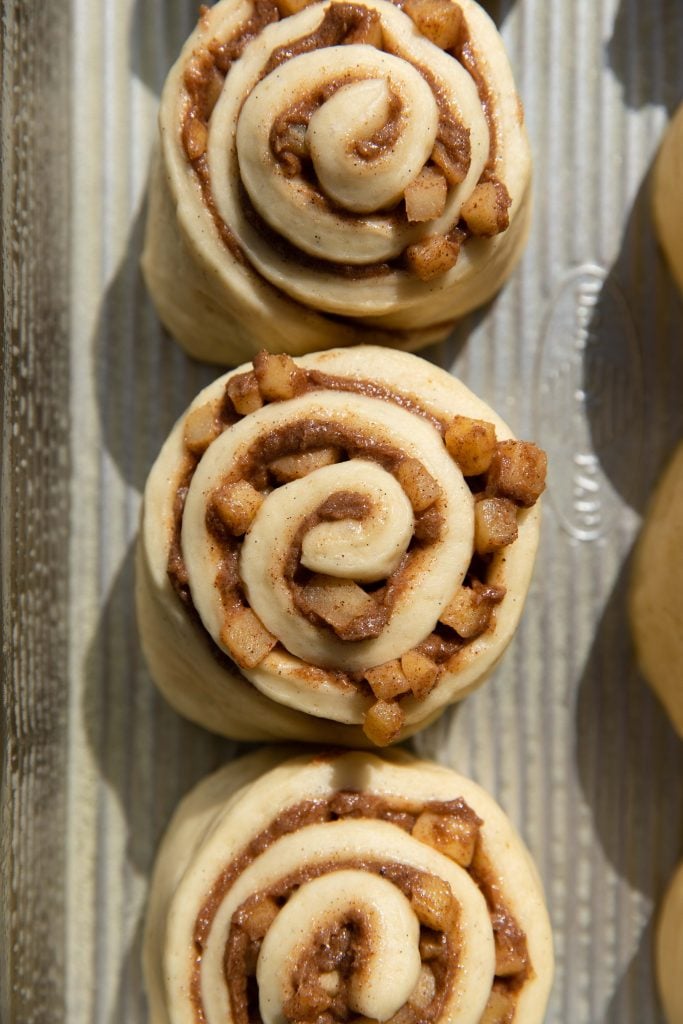
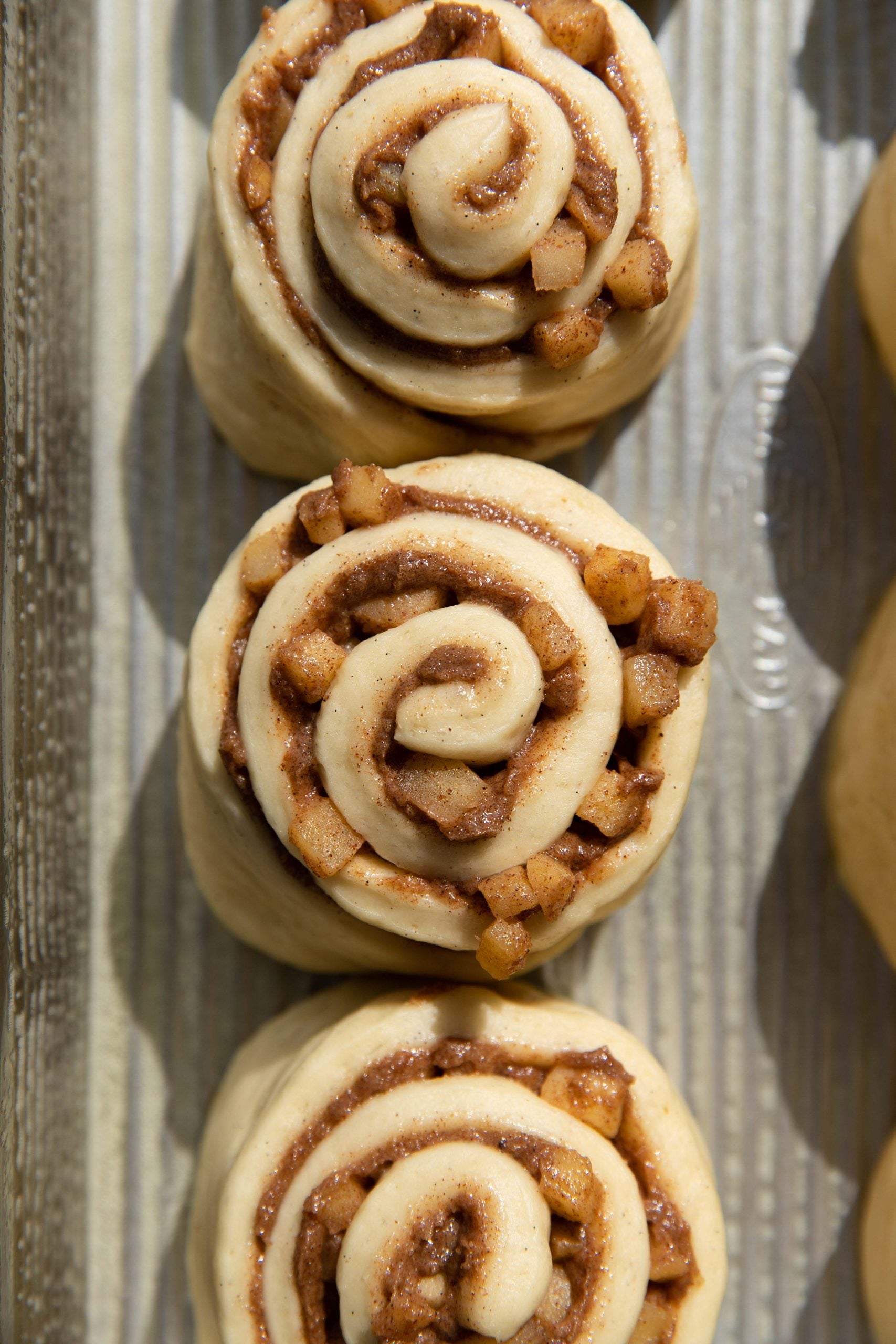
Spread the cinnamon sugar filling evenly across the dough using an offset spatula. Sprinkle about three-quarters of the cooled cinnamon apples over the filling, distributing them as evenly as possible.
Reserve the remaining apples for topping the baked cinnamon rolls.

step 5: cut and shape the cinnamon rolls
Use a sharp knife or pizza cutter to cut the dough into 2-inch-wide strips along the 15-inch side. Each strip should measure approximately 2 × 15 inches. You should have eight strips for the large rolls or twelve strips for the smaller rolls.
Starting at one end of each strip, roll it into a coil, keeping the roll snug but not too tight. Tuck the final inch of dough underneath each roll to help it hold its shape. Arrange the rolls in the prepared baking pan, leaving a little space between them.

step 6: let the rolls rise again
Cover the pan loosely with plastic wrap and let the shaped rolls rise for 30–40 minutes, or until they look puffy and slightly expanded. While the rolls finish rising, preheat the oven to 350°F (175°C).
step 7: bake the apple cinnamon rolls
Remove the plastic wrap and bake the rolls for 24–28 minutes, until the tops are golden brown and the centers are baked through. The internal temperature of the dough should reach at least 190°F (88°C) when checked with an instant-read thermometer. If the tops begin browning too quickly, loosely cover the pan with aluminum foil for the remainder of the baking time.
Let the rolls cool for about 10–15 minutes before frosting. They’ll still be warm, but the frosting won’t melt quite as quickly.
step 8: make the cream cheese frosting
Add the softened cream cheese and butter to a medium bowl. Beat with a hand mixer or stand mixer for about 2 minutes, until smooth and creamy. Add the powdered sugar, vanilla, and salt. Mix for another 2 minutes, scraping down the sides of the bowl as needed, until the frosting is smooth.
If the frosting seems too thick, let it sit at room temperature for a few minutes and mix again. If you prefer a sweeter or thicker frosting, add a little more powdered sugar.
step 9: frost and serve
Spread a few tablespoons of cream cheese frosting over each slightly cooled cinnamon roll, using the back of a spoon to spread it across the top. Finish each roll with a scoop of the reserved cinnamon apples.
Serve warm while the centers are soft and gooey, the cinnamon filling is fragrant, and the cream cheese frosting is just beginning to soften over the tops.

how to make apple cinnamon rolls with cream cheese frosting overnight
If doing the whole process in one day is too overwhelming or doesn’t fit your schedule, you can easily split the process up into two days! The easiest method is to prepare and shape the rolls the night before, then let them rise slowly in the refrigerator.
- Make the dough and let it rise. Follow the recipe through the first rise, allowing the dough to double in size.
- Prepare the apples and filling. Cook the apples, let them cool completely, and mix the cinnamon sugar filling.
- Assemble the rolls. Roll out the dough, add the filling and apples, cut the strips, and shape the rolls as directed.
- Refrigerate overnight. Place the rolls in a greased 9 × 13-inch baking pan. Cover tightly with plastic wrap and refrigerate for 8–16 hours.
- Let them warm up and finish rising. The next morning, remove the pan from the refrigerator and let the rolls sit at room temperature for about 45–90 minutes, or until puffy. They may need longer if your kitchen is cool.
- Bake as directed. Preheat the oven to 350°F (175°C) and bake for 24–28 minutes, checking for golden tops and an internal temperature of at least 190°F (88°C).
- Frost and serve. Make the cream cheese frosting while the rolls cool slightly, then frost and top with the reserved cinnamon apples.
Overnight cinnamon roll tip: If the rolls have already risen significantly in the refrigerator, they may need less time at room temperature. Look for puffy rolls rather than relying on the clock alone. If they appear overproofed or are collapsing, bake them sooner rather than waiting for another full rise.
how to make cinnamon roll dough without a stand mixer
A stand mixer definitely makes this process easier, but you can certainly make these by hand!
- Add all the dough ingredients to a large mixing bowl. Stir with a sturdy wooden spoon or spatula until a shaggy dough forms.
- Transfer the dough to a lightly floured work surface. Knead by hand for about 14–16 minutes, pushing the dough away with the heel of your hand, folding it back over itself, and turning it as you go.
- If the dough sticks excessively to your hands or work surface, add flour 1 tablespoon at a time. Avoid adding too much flour; the dough should remain soft and slightly tacky.
- Continue kneading until the dough looks smooth and feels elastic. It should stretch when gently pulled rather than immediately tearing.
- Shape the dough into a ball and place it in a lightly greased bowl. Cover and let it rise for 1–2 hours, until doubled in size.
Hand-kneading takes a little more effort, but the results are just as delicious.
ingredient substitutions
Here are a few ways to adapt these homemade apple cinnamon rolls based on what you have available.
- Bread flour: All-purpose flour works well and is already included as an option in the recipe. Bread flour gives the dough a little more chew, while all-purpose flour produces a softer texture.
- Milk: Whole milk adds richness, but 2% milk can also work. Unsweetened oat milk or soy milk can be used for a dairy-free alternative.
- Butter: Plant-based butter sticks can replace dairy butter in the dough, filling, and frosting. Not all plant based butters are created equal, so make sure you use one that holds up well in baking.
- Instant yeast: Active dry yeast can be used in the same quantity, but dissolve it in warm milk first according to the directions above. Make sure it becomes foamy before proceeding.
- Apples: Honeycrisp, Granny Smith, Pink Lady, Fuji, and Braeburn apples all work well. Granny Smith apples provide a tart contrast to the sweet filling, while Honeycrisp and Pink Lady apples are sweeter.
- Brown sugar: Light or dark brown sugar can be used. Dark brown sugar adds a slightly deeper molasses flavor. I prefer dark brown sugar, but use whatever you have on hand!
- Vanilla paste: Vanilla extract is an easy one-to-one substitute. You can also leave the vanilla out of the dough if needed.
- Cream cheese frosting: If you prefer something less tangy, use a simple vanilla glaze made with powdered sugar, vanilla, and a small amount of milk. Add the milk gradually until it reaches your desired consistency.
how to store leftover apple cinnamon rolls with cream cheese frosting
at room temperature
Because these rolls contain cream cheese frosting and cooked apples, refrigerating leftovers is the safest option. If you plan to serve the rolls shortly after baking, they can sit out while everyone enjoys them, but don’t leave frosted rolls at room temperature for more than 2 hours.
in the refrigerator
Place leftover cinnamon rolls in an airtight container and refrigerate for up to 4 days. You can store the rolls with the frosting already applied, or keep the frosting separate if you prefer. The refrigerator may make the dough a little firmer, but reheating brings back much of its soft texture.
in the freezer
For longer storage, freeze the rolls for up to 2–3 months for the best quality.
- Let the rolls cool completely.
- Wrap individual rolls tightly in plastic wrap, then place them in a freezer-safe bag or airtight container.
- For the best presentation, freeze the rolls unfrosted and prepare fresh frosting when you’re ready to serve them. You can also freeze already-frosted rolls if that’s more convenient.
Thaw the rolls overnight in the refrigerator or at room temperature for a short period, then reheat until warmed through.

how to reheat apple cinnamon rolls
- Microwave: Place one roll on a microwave-safe plate and heat in 15–20-second intervals until warm. Avoid overheating, which can make the dough tough.
- Oven: Cover the rolls loosely with foil and warm in a 300°F (150°C) oven for about 10–15 minutes, or until heated through. Allow more time if reheating several rolls together.
If the rolls are already frosted, gentle reheating works best so the frosting doesn’t melt completely.
frequently asked questions for apple cinnamon rolls with cream cheese frosting
Yes! Mix the ingredients in a large bow, then knead the dough by hand on a lightly floured surface for about 14-16 minutes, until smooth and elastic. Let it rise as directed before rolling and shaping.
Yes. This recipe is written for instant yeast, which can be mixed directly into the dough. If you’re using active dry yeast, dissolve it in warm milk with a little of the measured sugar and let it become foamy before adding it to the dough.
This could be caused by a few different things. Your yeast may be expired or inactive, your kitchen may be too cold, or your milk or melted butter may have been too hot when mixed with the yeast. Give the dough extra time in a warm spot in your kitchen before deciding if the dough has completely failed!
The tops should be golden brown, and the centers should be baked rather than doughy. If you have an instant-read thermometer, the center of the rolls should reach at least 190°F.






What’d you think? I’d love to hear your thoughts or if you have any questions!